

Doing research in the fields: reflections on the meaning of inclusive fieldwork in uncertain times
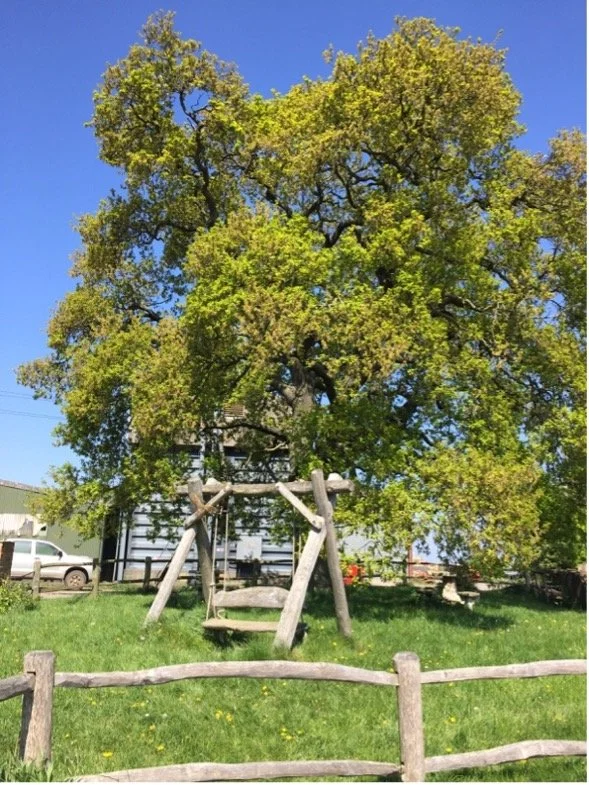
Field and large tree at the local farm near the Leicestershire village where I lived until recently.
My journey into working with UK farmers began in 2010 when I accepted a funded PhD position in collaboration with one of the largest global food manufacturers and their UK-based suppliers of potatoes, apples and oats. I remember feeling very excited about the research ahead but also anxious; after all, I am not a farmer myself and do not have a farming background. The closest I had ever come to farm labour at the time was through my summer jobs during grape harvest growing up as a teenager in Burgundy, France. I was very aware of this, and I think it gave me a certain level of humility as well as great curiosity when I first met the farmers who were going to be the participants in my doctoral research. My journey as an academic started in the fields of British farms, quite literally.
Fast-forward 15 years and here we are, me and Lucy with a fantastic team of researchers, co-leading a project centred on UK farmers, bringing their needs and realities to the fore of our research endeavours. As a researcher, I have never looked back. The participatory work I conducted and relationships I developed with farmers during my PhD, unveiling the power dynamics at play in food supply chains, and my personal interest and passion for good food have shaped my entire career.
I would love to say that I now feel less anxious about being a non-farmer doing work in the space of food and agriculture, but it is only partly true. Over time, I have learned a tremendous amount about the UK food and agriculture landscape, both in terms of policy and practice, and about the realities and experiences of farmers. I feel better equipped to think about how participatory/engaged research might be shaped to ensure their needs are foregrounded. Yet I also know that my position as a researcher, even one with the best of intentions, greatest level of care and self-reflexivity, is one of privilege. I find myself constantly thinking: “Am I doing the right thing? Am I being as inclusive as I can be?”. Asking these questions is fundamental to the praxis of engaged research. However, it then leads to the very possibility of getting ‘stuck’ or paralysed as no approach ever feels quite right, and any attempt at engagement feels intrusive and extractive, particularly in the face of the difficult realities of farming in the UK.
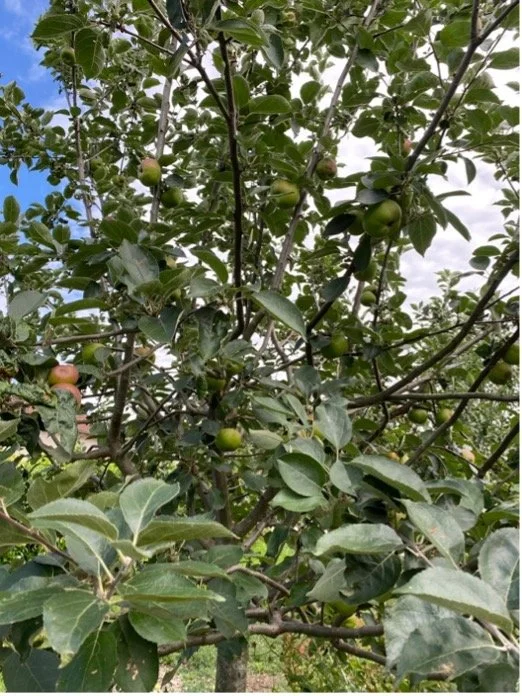
Pictures taken on walks in the fields of Leicestershire; apple tree
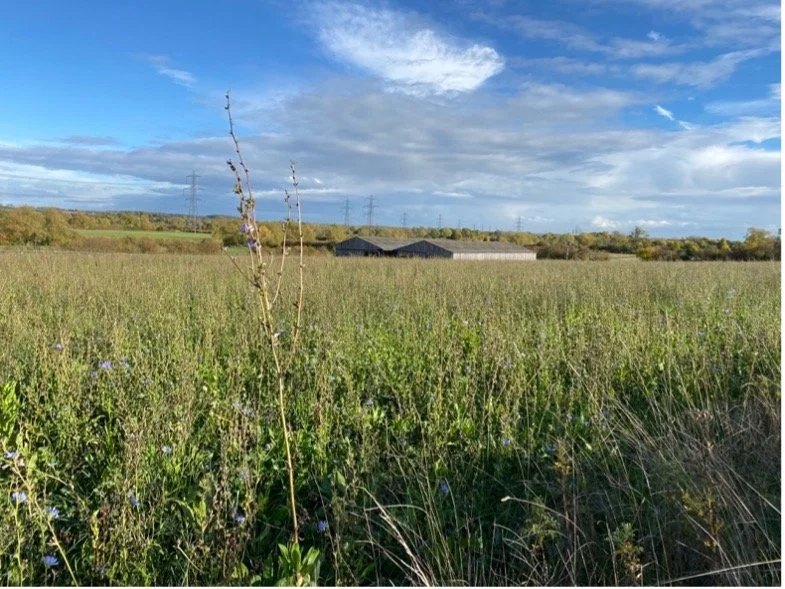
Pictures taken on walks in the fields of Leicestershire; mixed grasses
Over the last few months, I have been confronted with these questions (doubts?) many times as we started the project and initiated the first attempts at bringing our project partners together (several of them farmers) and at organising workshops with apple growers. The reality of UK farming is stark (and that is an understatement). Every year, hundreds of farmers go out of business; their hard work is not valued, and they can barely (if at all) cover their costs, squeezed by large retailers and food processors. On top of that, farmers experience first-hand the manifestations of the climate breakdown. Extreme weather events are now the norm, from torrential rains and floods to draughts and heatwaves. Politically, things feel uncertain unfortunately. While hope was on the horizon with a renewed focus on food and the revival of the food strategy over the summer, there is a sense that ministerial trials and tribulations quickly bring any real progress to a standstill. And this is only a very brief outline of the situation, I am not even touching on questions of wellbeing and mental health and how global geopolitics are coming into the picture.
In many ways there has never been a more critical time to carry out a project that seeks to deliver greater value and benefits for UK farmers. But it means that we need to be able to adapt to the context they find themselves in. Our first attempts at adapting included a multi-pronged approach to advertising and recruiting workshop participants, using multiple modes of communication to keep in touch with partners (including phone calls, Instagram chats, Whatsapp, etc.). Some of it worked, and some of it did not. Attending events has proven to be a more successful strategy but means trying to fit in existing schedules and programmes. We talked to our advisory board about it, and they reassured us that we weren’t alone in this. It is hard for everyone. So, as we progress, we revisit again and again, what we initially envisioned as part of work package 1. Right now, the only approach that feels right is getting into the fields. Meeting farmers one-to-one. Our next farm visit is next week in Oxfordshire.
I have often thought that academic writing about fieldwork felt quite sanitised, gave this impression of neatness and linearity. The reality of fieldwork is messy, full of surprises (and failures!), and far from linear. This piece, I hope, can be a small window into this. As I ponder on the meanings of ‘field’ and ‘fieldwork’, I have fallen into a rabbit hole. There is much literature on these very topics, from geography, to philosophy and history of science. For the next blog perhaps…