

Circularity in the apple supply chain: is there a role for livestock?
It all started with a coffee. Back in July 2023, Lucy and I were chatting about circularity in food systems and my own passion—livestock sustainability. Like academics often do, we began exploring where our expertise overlapped and what questions we could ask together.
Lucy (Anne and Ursula) had already been working on the apple supply chain and circularity. That sparked a thought: could we find a win–win where waste from the apple industry—not fit for human consumption—could instead feed livestock, rather than being left in orchards, composted, or sent to anaerobic digesters?
Don’t get me wrong, those options aren’t bad at all. Leaving apples on the ground and composting can enhance soil health, and anaerobic digesters can produce renewable energy. But I wondered: could we first turn this “waste” into something more noble, like meat or milk, before it returns to the soil as highly nutritive manure?
At first, I didn’t think our conversation would go very far despite our very interesting points for collaboration. After all, I like apples, but my knowledge of the UK apple supply chain was limited. (It still is—but growing rapidly since we started this project!) A few weeks later, Lucy invited me to join the DECIDE team and apply for funding. That’s when things got exciting.
Why apples? Why livestock?
With my animal scientist hat on, I began digging into how apple by-products, especially pomace, could benefit livestock. I quickly came across some intriguing, but contrasting, research. Apples are rich in tannins and polyphenols, which may reduce methane emissions in cattle.
Methane once played a vital role in shaping Earth’s atmosphere. But today, alongside excess CO₂ and other greenhouse gases (like methane), that we have been releasing in a huge and uncontrolled rate since the industrial revolution, it contributes to climate change. Agriculture, and particularly cattle, are under pressure to reduce emissions. Could apple pomace help both reduce waste from the apple supply chain, minimising it’s carbon footprint and, at the same time, cut methane emissions from livestock?
From idea to project
Luckily, our project was awarded funding! While feeding apple pomace to livestock is just one piece of the circularity puzzle, we are now exploring how cows might thrive on it and whether methane emissions can be reduced at the same time. Other ideas are also on the table: could sheep graze orchards, or pigs be fed apple by-products? Unfortunately the project DECIDE budget and timeframe won’t allow us to explore these other options, but maybe in the future we could consider them.
Testing apple pomace on the farm
Last autumn at our Bristol Vet School’s Wyndhurst Farm, within The John Oldacre Centre for Dairy Welfare & Sustainability Research, we ran a trial with our heifers (young cows). They were offered apple pomace as part of their diets, and we measured how they perform and what happensed to their emissions.
For this, we used individual feeding stations called Greenfeeds. These allowed us to measure each animal’s CO₂ and methane output while they eat. Here’s an example of a Greenfeed in action with a cow (not one of ours):
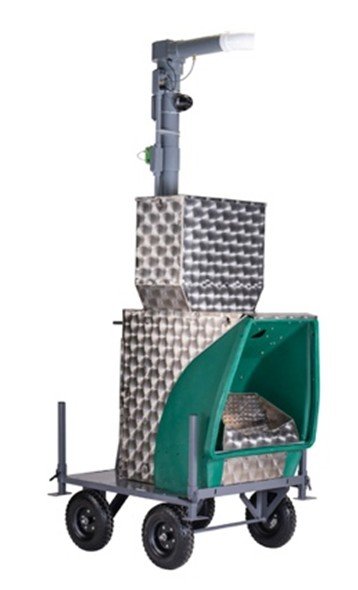
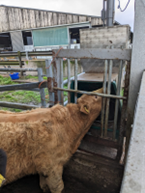
Stay tuned—we’re eager to see how our heifers respond to apple pomace!
Building an apple nutritional library
We’re also studying how different apple varieties vary nutritionally for cattle. The goal is to build an “apple nutritional library” so farmers can better understand the possibilities (and limits) of feeding apples or pomace to livestock.
Here are some of the first apples we’ve harvested recent to be analysed: