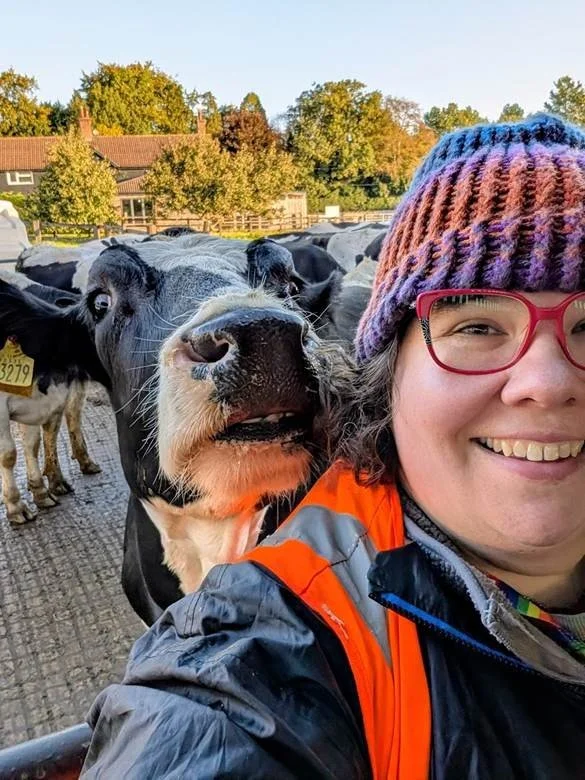

Reflections from an Livestock Researcher Working with Apples
I should probably start by saying that reflective blogs are not something I’ve written before. I’m far more used to papers, reports, datasets and presentations than writing something personal about a project experience. But in some ways, that feels quite fitting for this project itself, because a lot of it has involved stepping slightly outside my usual comfort zone.
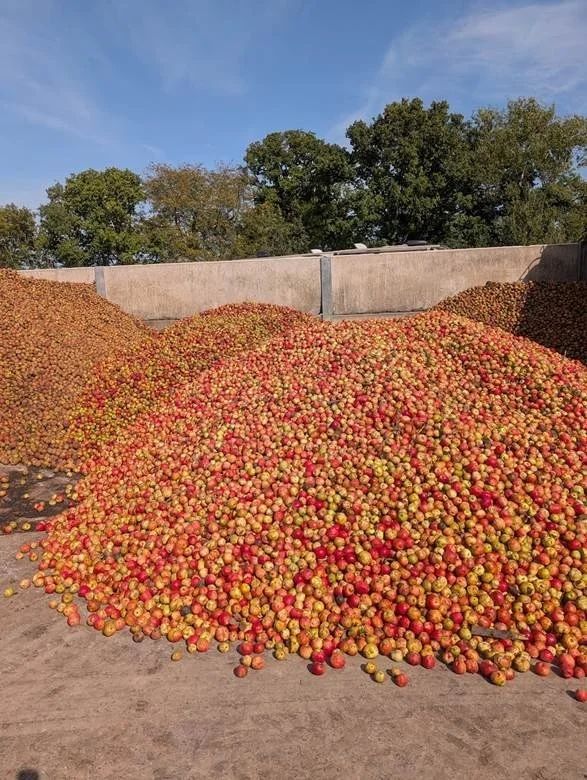
My background is in animal science, agri-tech and data modelling, so most of my work has focused on livestock systems, emissions and the carbon footprinting. This project has been such an interesting mix of the familiar and the new: cattle, which I know well and will probably always enjoy working with, alongside apples, which were completely new territory at the start. It’s also been quite amusing how quickly word spreads once people hear you’re working on apples too. I’ve lost count of the number of conversations that start with “I hear you’re working on apples now?” – not quite where I expected my career to head when I first got into animal science.
One thing I’ve really enjoyed is the balance the project brings. Some days involve being on-farm running trials, others are spent in orchards collecting apples, in meetings, the lab, or behind a desk working through datasets and modelling, the variety suits me well. I’ve also ended up learning far more than I expected about apple varieties from trips out to orchards collecting samples for NIRS analysis, which is helping to build a nutritional library and better understand their potential use within livestock systems.
What I’ve found particularly interesting is the discussion around apple pomace from cider production. It’s often referred to as a waste product, but the more I’ve worked on this project, the more I’ve found myself questioning that language. I’ve had to stop myself multiple times from automatically referring to things as “waste” or “surplus”, because those words carry assumptions with them. If something can still be used productively, whether that’s for livestock feed, energy generation or another purpose, is it really waste at all? Or is it simply a resource that hasn’t found its next use yet? That shift in perspective feels quite central to the idea of circularity. The terminology matters, because the way we frame materials shapes how we value them, how we look for opportunities to reuse them, and even how we model flows and carbon/emissions through the supply chain. We’ve also tested this in practice, including a trial feeding apple pomace to heifers where we recorded methane emissions and saw around a 9% reduction. That reduction is likely linked to the tannins present in cider apple varieties, which makes it a nice example of how something often labelled as “waste” could have a functional role within livestock systems.
Apples and apple by-products were historically fed to cattle far more commonly before anaerobic digestion became a major outlet. It does make you wonder whether we might see more interest in using them within livestock systems again, particularly with increasingly hot and dry summers, more variable grass growth and pressure on forage supplies – last year being a good example. There’s a wider conversation to be had around alternative feedstocks and the circular use of agricultural by-products, and how these different parts of the system connect.
I’ve liked the more bottom-up feel of the project. Food systems discussions can sometimes feel dominated by the biggest organisations or whoever holds the most influence in the room, but this has felt much more collaborative. There’s been real value placed on perspectives from across the supply chain, which makes the conversations feel more grounded and practical. More than anything, this project has been a reminder that real-world sustainability challenges don’t sit neatly in one discipline. Working across livestock, apples, life cycle assessment (LCA) and everything in between has pushed me outside my usual silo in a good way. I may have started out knowing far more about cattle and methane than apples, but I’ve definitely enjoyed branching out (pun intended!).